
Taking the Oath. I was naturalized as a United States citizen in Philadelphia today. This was a big step for me personally that started with my move to the US more than a decade ago. As an immigrant physician-scientist, I have lived through the most dynamic decade in child neurology, which is my chosen field of work. During this time, many previously unnamed conditions have been deciphered, genetically characterized, and moved towards targeted treatments such as gene therapies. With this as a background, let me summarize why I am excited to be a US citizen.
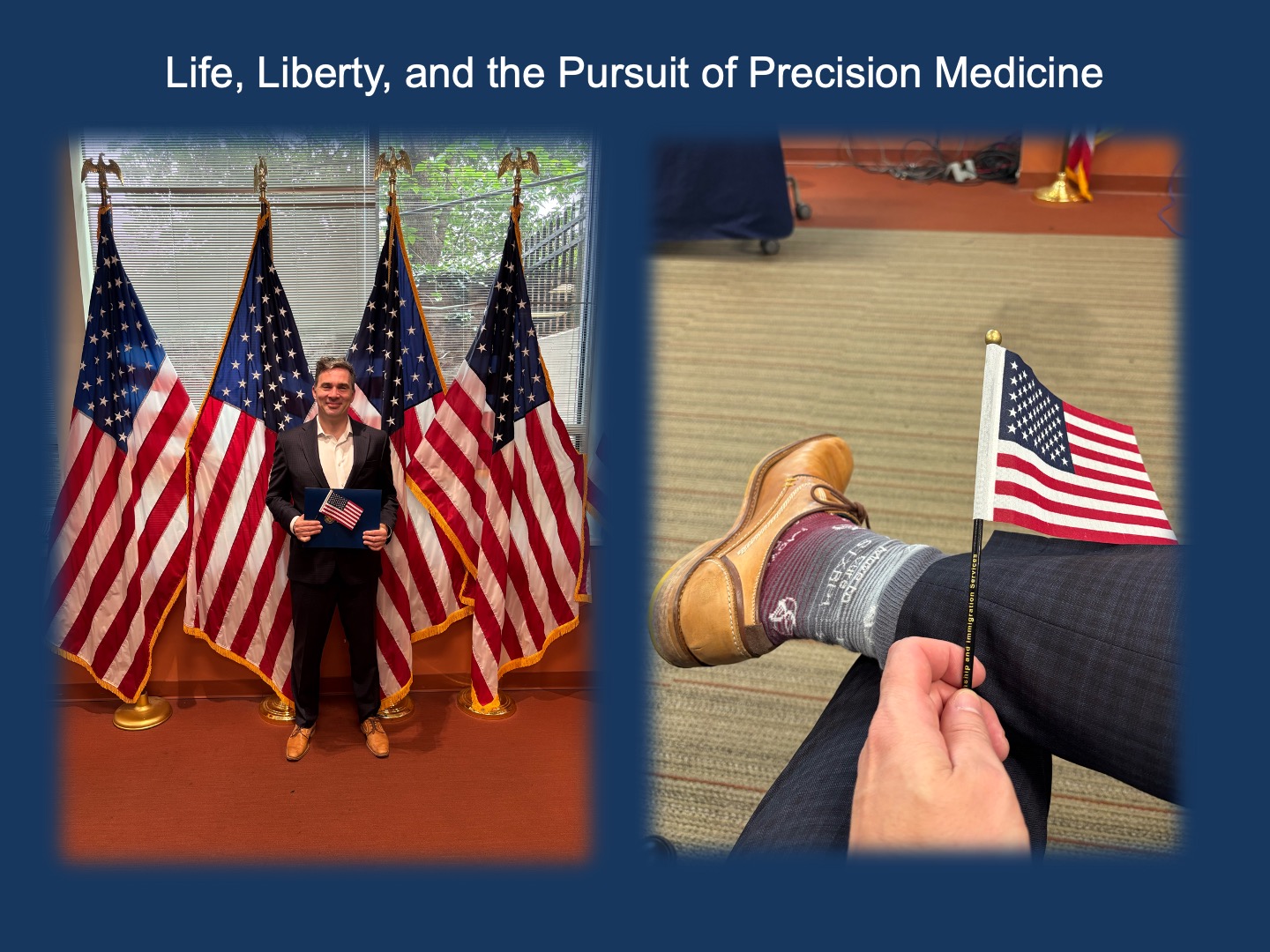
Figure 1. Introducing Citizen Helbig. I was naturalized as a United States citizen in Philadelphia today, alongside fellow new citizens from 25 countries, ranging from Afghanistan to Uganda. Also, I was wearing my STXBP1 sock for my naturalization ceremony.
Beyond politics. Yes, there are some very pragmatic reasons to be a US citizen. Peace of mind in turbulent times and a polarizing climate. A box to be ticked, citizenship as a transactional component for career opportunities. However, this is not why I am writing this. And as a new citizen, I have a unique perspective that is beyond politics and the current 24hr news cycle. Having spent the last year thinking about citizenship, I wanted to share three somewhat unique reasons what being a US citizen means to me.
Opportunity for rare diseases – no more zero-sum games. I spent a year as an exchange student in Medical School in Lexington, KY, where I decided to specialize in pediatric neurology. Since then, I have held medical licenses on three continents, trained with world experts in the field, and built and re-built my research groups and clinical teams. I am now part of the leadership of one of the largest epilepsy genetics programs in the world, and with a mixture of institutional, federal, and philanthropic support, we have built a specialty center for synapse disorders. This was my dream more than a decade ago, and this would not have been possible anywhere but in the US. And to me, finally being a citizen means to be able to fully participate in the society that has made this possible.
Doing away with social formalities. I have spent almost half of my adult life in countries other than Germany. And with this roughly 50/50 split, I have experienced many situations in the medical and research field in both cultures. Typically, when we exclusively live in a single country, it is often hard to fathom how a given situation, a workplace conflict, a request for a support letter, an open discussion about an idea, would be handled in both cultures. But having moved back and forth between English-speaking and German-speaking countries, there is one thing that stood out to me: the relatively low level of social formality in the US. In his 2008 book Outliers, Malcolm Gladwell uses the example of a plane crash to highlight how cultural attitudes toward authority can affect decision-making, particularly in high-stakes environments like aviation. The same is true for the rare disease field. The low level of formality in the US is a big catalyst to progress – first-name basis is generally accepted, which is a social equalizer in collaborative teams across research, clinical care, and patient advocacy. I could not see how such a system could work efficiently if we constantly needed to negotiate social formalities such as using titles or addressing people with the formal third person plural (“Sie”) or the informal second person singular (“Du”). Even across organizational hierarchies, discussions are more participatory and interactive and decision-making is simplified. Most Germans would probably not believe that most work calls I have during the week are very pleasant and motivating because of this. And this is the work culture that I feel most comfortable working in.
Can do attitude. Between 1831 and 1832, French Aristocrat Alexis de Tocqueville spent nine months travelling through the United States, trying to understand the character of this new nation and why American democracy, against all odds, actually worked. One of the observations that Tocqueville made was that Americans had a restless energy and a belief in self-made reinvention – he concluded that mobility was a defining feature of the American character. Today, we often associate restless energy and self-made reinvention with “greed is good” capitalism and “sleep when you’re dead” start-up culture. But this is not the whole story, it is simply the most recent reinvention, soon to be replaced by something different.
What is next? My answer: whatever the situation calls for. You only truly appreciate the profoundly pragmatic attitude that sits at the core of our very thinking if you have lived somewhere else. Leave bigger thoughts and principles behind – if you want to solve a problem, usefulness in real life rather than rules and theory matters. And there is no area where this pragmatism matters more than rare disease.
Reinvention is constantly happening. Over the last few weeks, we have seen the first in vivo CRISPR-based gene therapy for a rare pediatric disease. In addition, the first gene therapy trial for STXBP1-related disorders is about to become reality. At the same time, there are major re-alignments with regards to research support, a polarized political arena, and the rapid emergence of generative AI. We are likely in the process of another large reinvention, and it is likely typical not to see it while we are part of this. But the US is constantly in flux.
When I moved to the US in 2014, I frequently listened to Hollywood by Marina and the Diamonds. The chorus captures this idea very neatly:
I’m obsessed with the mess that’s America.
