
Monastic. I am now roughly one month into the first real job of my life. I celebrated this transition by spending a week with my family in Kamp-Lintfort, Germany, a small town at the Western edge of the Ruhr area known for its coal mining heritage and Cistercian abbey. After two decades of training roles and academic positions that were either time-limited or contingent, I was tenured at the University of Pennsylvania in July 2025. But tenure is a strange thing these days. Here are my thoughts about modern academia, monastic life in the 12th century, and the possibilities of being able to venture into the unknown.
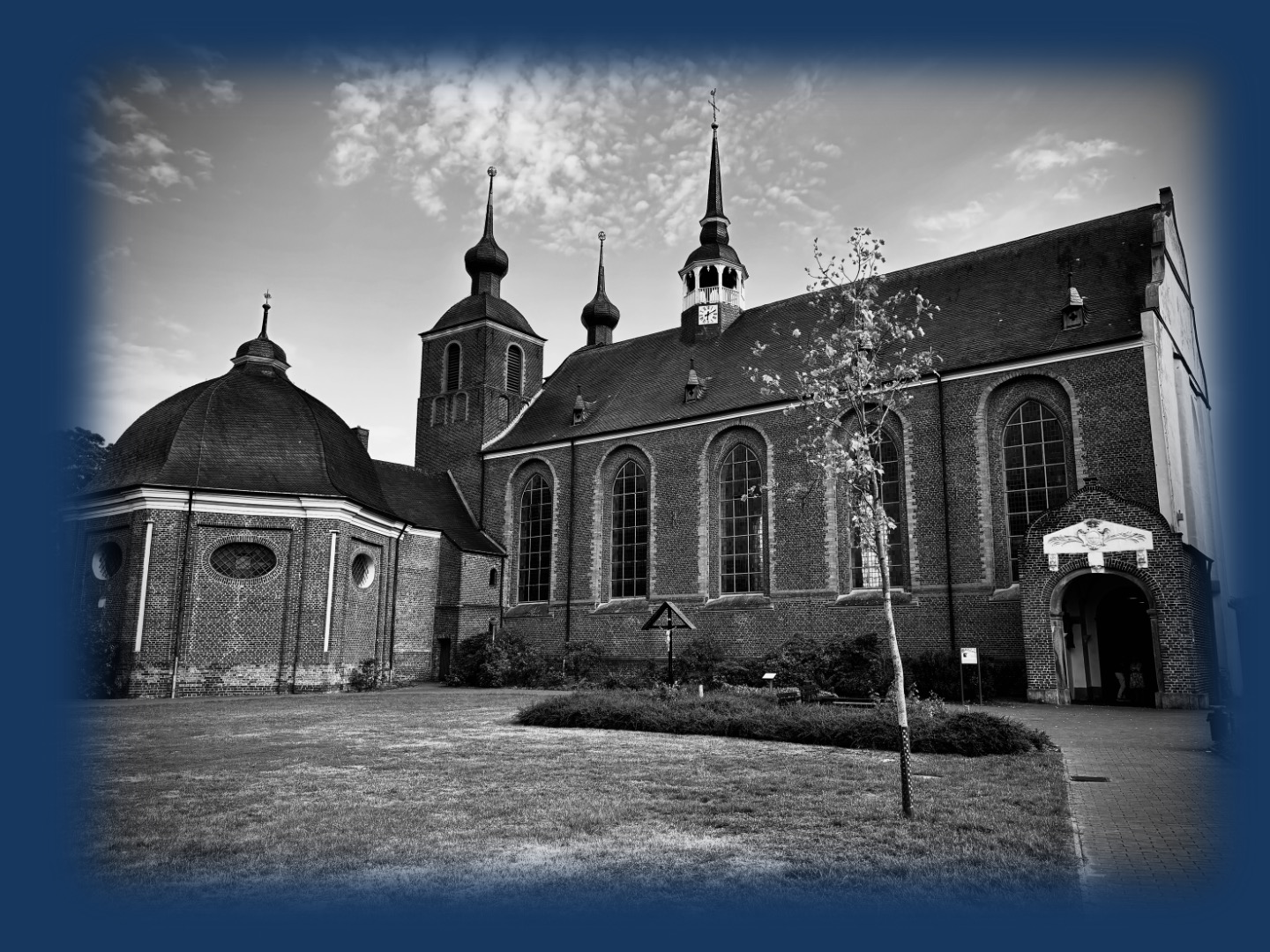
Figure 1. The Kamp Abbey in Kamp-Lintfort, Germany, viewed from the entrance. Founded in 1123, this Cistercian monastery has played a pivotal role in shaping the intellectual and spiritual landscape of the region, including contributions to monastic scholarship and agricultural innovations.
Kamp-Lintfort. A few weeks ago, I finished “The Wandering Mind”, my first summer read of 2025. After I stumbled upon this book in a bookstore earlier this year, the underlying premise intrigued me. In brief, author Jamie Kreiner gives an insight into the psychological tricks and mental hacks of early medieval monks, including the various strategies they developed to keep their minds steady. Memory palaces, mindfulness, and metacognition – it appears that the medieval friars were well ahead of their time and developed strategies and concepts that would take more than 1,000 years to either be rediscovered by modern psychology or reintroduced to the West through Eastern philosophies and religions. The Kamp Abbey in Kamp-Lintfort, one of the intellectual centers of Cistercian intellectual life, was one of the major hubs in Europe where knowledge was preserved. This was fueled by the various strategies that monks develop to stay focused. Also, it took me almost 30 years of no longer living in Kamp-Lintfort to realize the beauty and historical background of our old abbey.
Heidelberg. Let’s take a brief journey from medieval monasteries to modern academic life. Think of early medieval monasteries as one of the earliest approaches to provide people the safety to pursue specific interests such as bookbinding, agricultural advancements, water mills, and the Gregorian calendar. Early institutions focused on academic knowledge were largely based on the personalities of the people running them, such as the academy run by Plato or Aristotle. This changed after monasteries became one of the main contributors to intellectual life: less personal but strictly bound to the rules of religion and the specific monastic orders. Kamp Abbey was a foundational Cistercian abbey, a branch of monasticism that focused on simplicity and manual labor. Only much later did academic life become disentangled from religion. My alma mater, Heidelberg, founded in 1386, was one of the first universities to pivot to state-supported, secular education. Lifetime commitments by monks became life-time appointments of professors at state-sponsored universities. And with this, we are almost back in the present tense.
Humboldtian. Early on, even state-sponsored universities were very formal, and professorships resembled cleric positions. In the Great Hall of the University of Heidelberg, you can still admire some of the beautifully decorated chairs professors occupied during lectures – the modern concept of a “department chair” is derived from these wooden thrones. By the early 19th century, the modern concept of a research university emerged, which is often linked to the ideas of the German educational reformer Wilhelm von Humboldt (1767–1835). Of note, there were two Humboldts – if you come across any of the parks, mountains, or lakes named after Humboldt, it most likely refers to Wilhelm’s younger brother Alexander von Humboldt, who was one of the most prominent scientists and naturalists of the 19th century. However, it was the older Humboldt brother who came up with the modern model of what we typically understand as a research university: higher education with emphasis on research-driven teaching, academic freedom, personal development, and institutional autonomy. This model heavily influenced US institutions such as Johns Hopkins and the University of Chicago as well as career structure, as can be seen in the Declaration on Academic Freedom and Tenure of the American Association of University Professors (AAUP) in 1915. In brief, academic freedom and the unity of research and teaching required job security, and the modern concept of tenure was born.
Tenure in the 21st century. The history of tenure does not stop in the early 20th century. Tenured positions expanded in the US with the growth of higher education in the first half of the 20th century, and tenure became a widespread expectation for university faculty, especially in research-intensive institutions. However, in the light of economic downturns and decreased public funding, tenured positions came under increased scrutiny starting in the 1970s. Access to tenure was narrowed, and a two-tier system emerged. Non–tenure track roles were increasingly implemented, including adjuncts, lecturers, and clinical faculty. The rise of non-tenured positions was rapid, especially in academic medicine. While roughly 60% of the faculty of a typical US medical school was tenured in 1980, this has dropped to 20% by 2025. Within medical faculties at competitive research universities aligned with large medical centers, this percentage is probably in the single digits. In a nutshell, being granted tenure in academic medicine in 2025 is a rare privilege with a rich historical connotation. But what is one supposed to do with this?
Opportunity. To me, it is still somewhat inconceivable that I am now in an academic role that is relatively permanent. I graduated medical school in 2005 and spent two decades in training positions, fellowships, and academic qualifying positions, complicated by the fact that I have trained on three different continents with different career trajectories and definitions. In a way, it’s all that I have known so far. In situations like this, tenure feels like an accomplishment or an achievement. However, I would like to think that tenure is not a destination. It is a platform; an opportunity to step back, reflect, and build more intentionally—the transition from career-building to field-building. Working in the rare disease field made me think differently about neurology and how to stay curious in the face of complexity. If tenure comes with anything, it is the responsibility to protect that curiosity for questions that remain unsolved.
